



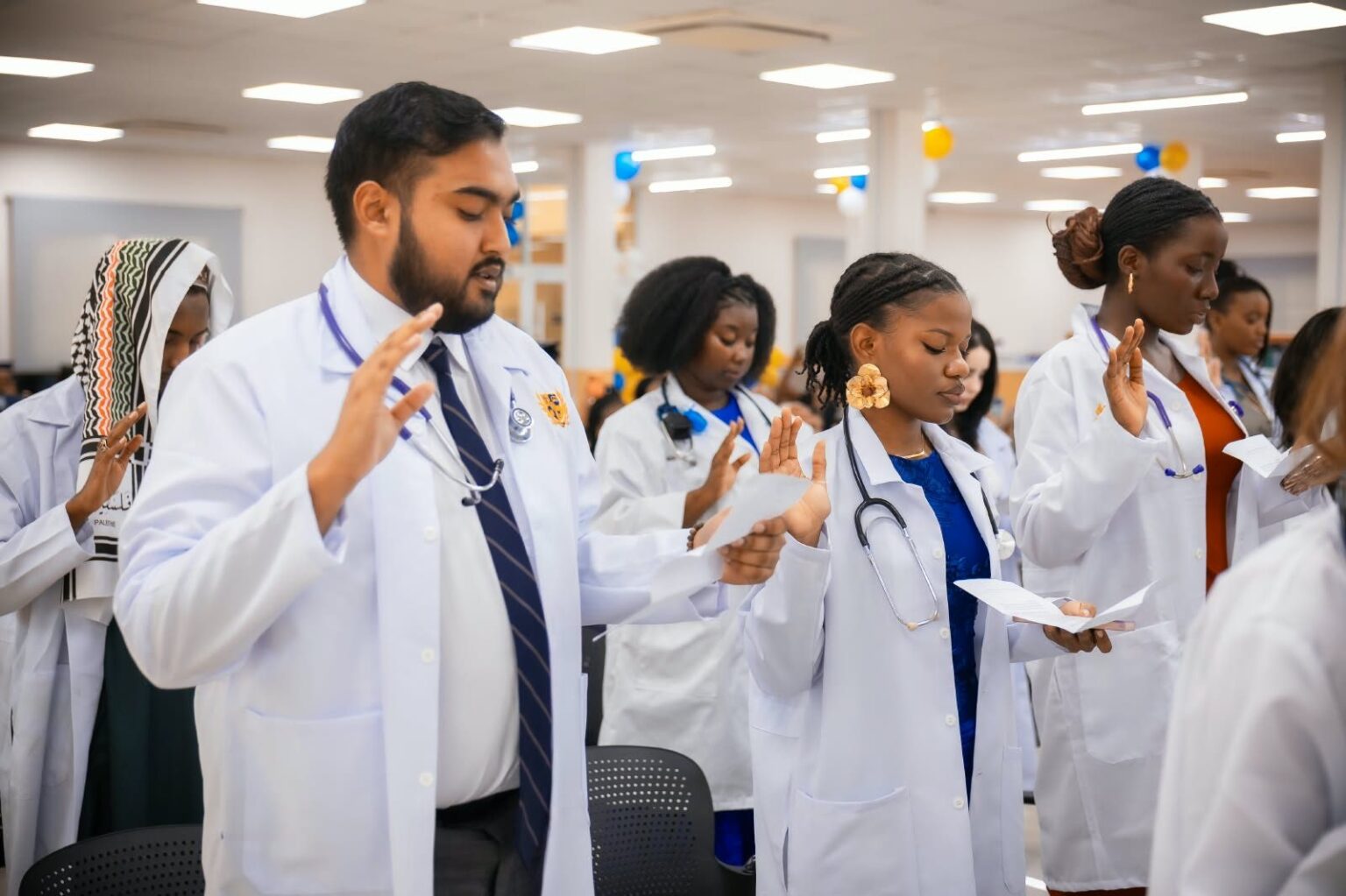

(Kaieteur News) – Texila American University (TAU) welcomed a new cohort of aspiring physicians to its College of Medicine on Friday last, as the institution highlighted its investment in artificial intelligence (AI), medical simulation and modern clinical training.
The university’s White Coat Ceremony marked the students’ entry into a new phase of their medical education, underscoring the importance of professionalism, ethical conduct, compassion and patient-centred care.
TAU also used the occasion to showcase its Medical Simulation Laboratory (SIM Lab) and CyberPatient virtual patient platform, which allow students to practise clinical skills and develop diagnostic and decision-making abilities before entering real-world healthcare settings.
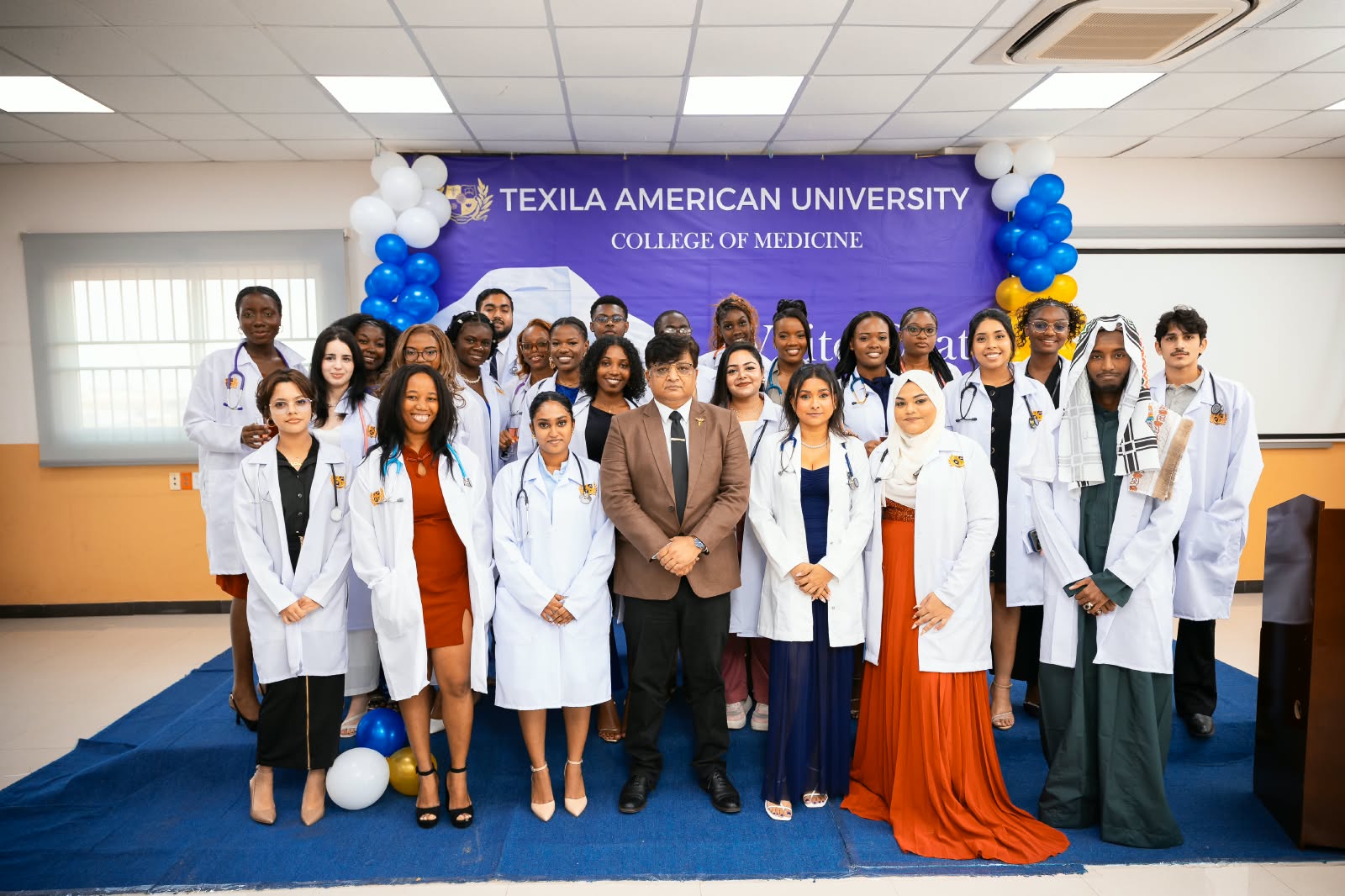
New doctors and other officials at the ceremony.
Simulation lab prepares students for clinical practice
According to a press release, the university’s SIM Lab is designed to bridge the gap between classroom instruction and practical medical training through hands-on exercises using simulation mannequins capable of replicating human physiological functions, including cardiac and respiratory responses.
The technology allows students to practise patient assessments, sharpen their clinical reasoning and respond to simulated medical situations in a supervised environment.
According to the university, simulation-based training helps students build clinical confidence, improve decision-making and strengthen patient safety practices before progressing to clinical settings.
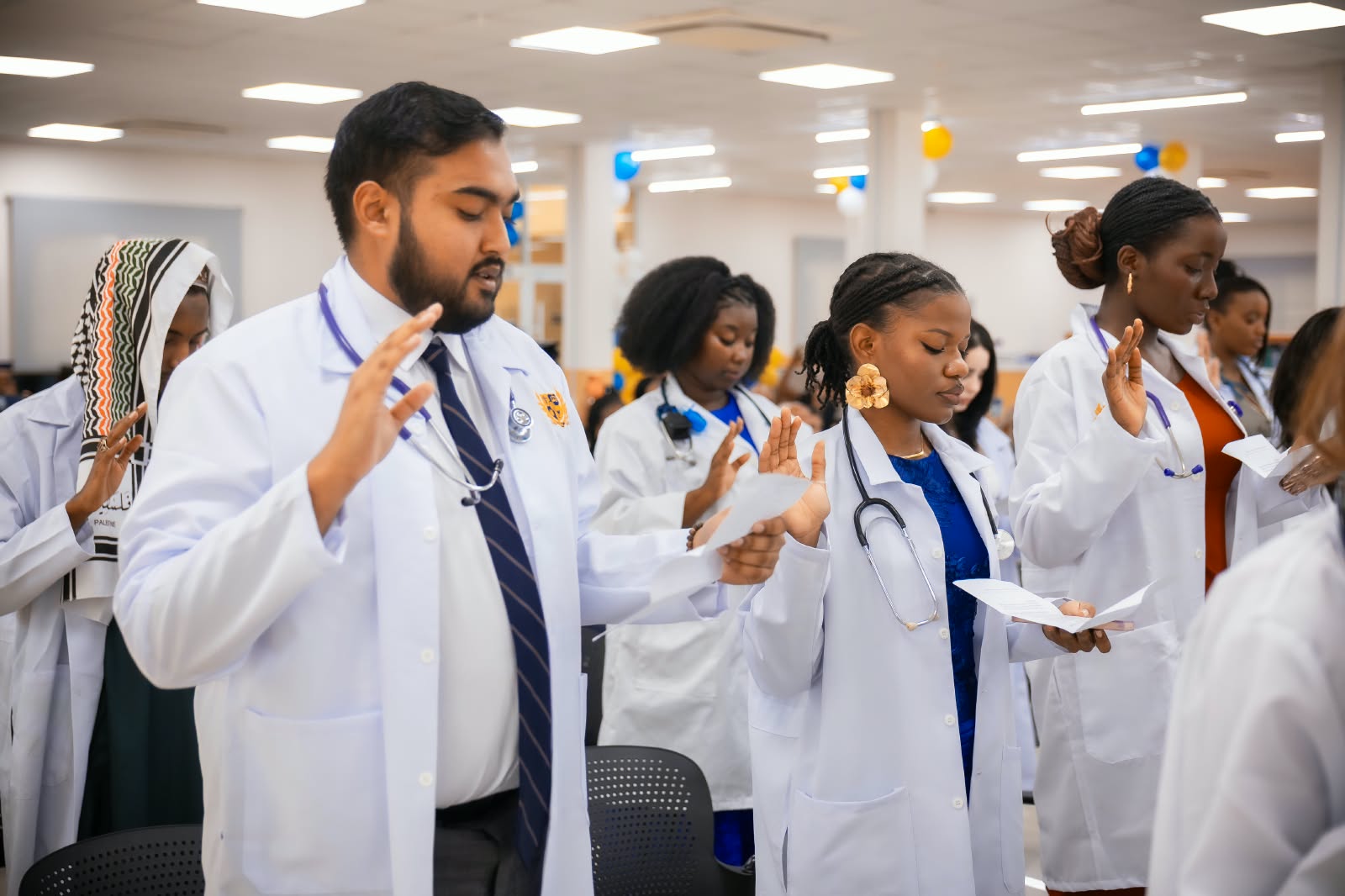
New doctors taking the oath.
AI platform allows students to assess virtual patients
TAU has also integrated artificial intelligence into its medical curriculum through its CyberPatient virtual patient simulation platform.
The system allows students to interact with virtual patients, obtain medical histories, assess clinical findings, select diagnostic investigations and make clinical decisions. It also provides feedback on their assessments, helping them identify weaknesses and improve their diagnostic reasoning.
Speaking at the ceremony, Dr. Dheeraj Bansal, Chief Academic Officer and Dean of the College of Medicine, highlighted the importance of incorporating emerging technologies into medical education.
He said AI-assisted learning and simulation-based training give students additional opportunities to apply medical knowledge, develop practical competencies and prepare for increasingly complex healthcare environments.
The university said the combination of AI-powered learning, simulation facilities and faculty guidance forms part of its approach to student-centred medical education.
TAU highlights international accreditations
The institution also pointed to its three international accreditations, which it said reflect its commitment to academic quality, institutional accountability and internationally benchmarked educational standards.
TAU stated that its College of Medicine holds accreditation from two internationally recognised medical education accrediting bodies. However, the names of the accrediting bodies were not provided in the information supplied.
The university said its accreditations, alongside its simulation facilities, AI-enabled teaching tools and clinical training opportunities, reinforce its standing as an international medical education institution in the Caribbean.
Community outreach promotes compassionate care
Beyond academic and technological training, the ceremony reinforced the importance of empathy, integrity, patience and professionalism in the medical field.
Dr. Bansal encouraged the incoming students to recognise that becoming a successful physician requires more than academic knowledge and technical competence, stressing the importance of compassion and a lifelong commitment to patient care.
TAU also highlighted its health camps and community outreach initiatives across Guyana, including in remote communities, as an important part of medical training.
Through these activities, students gain exposure to diverse healthcare needs while developing an understanding of their social responsibilities and the importance of community-oriented care.
The university said these experiences complement classroom teaching and simulation exercises by exposing students to the human realities of healthcare delivery.
University seeks to strengthen Guyana’s medical education sector
TAU said it continues to invest in academic infrastructure, advanced teaching technologies, simulation-based learning and clinical training opportunities to prepare future healthcare professionals.
Its approach combines traditional medical instruction with emerging technologies, including artificial intelligence, as it seeks to equip students for the changing demands of healthcare locally and internationally.
The White Coat Ceremony marked the beginning of the new students’ journey towards becoming physicians, while reminding them of the professional and ethical responsibilities associated with the medical profession.
Source: Kaieteur News



