By Khadidja Ba
(Kaieteur News) – After decades of carrying their grievances in quiet resilience, some Indigenous communities of Guyana’s interior have broken a long silence. In an unprecedented wave of coordinated, peaceful action, villages across Region One (Barima-Waini) and Region Seven (Cuyuni-Mazaruni) took to their titled lands and riverbanks in a display of collective resolve not seen in generations. From the dense forests of Chinese Landing and Tassawini to the riverine settlements of Kangaruma, Phillipai, Kamarang, Warawatta, Kako, and Isseneru, residents stood united to demand an immediate end to systemic neglect, environmental destruction, and unconsulted resource extraction.
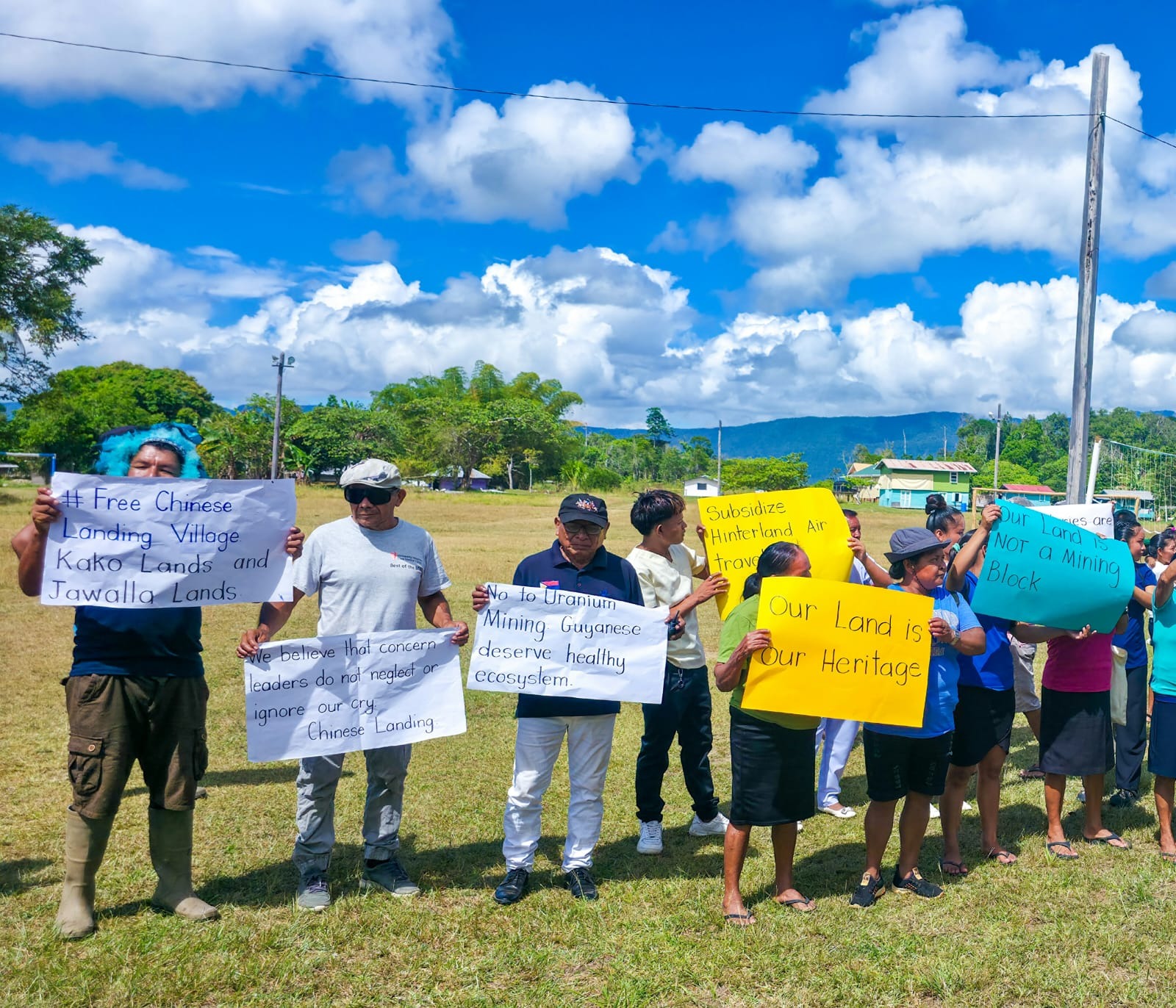
Protestors in Kako
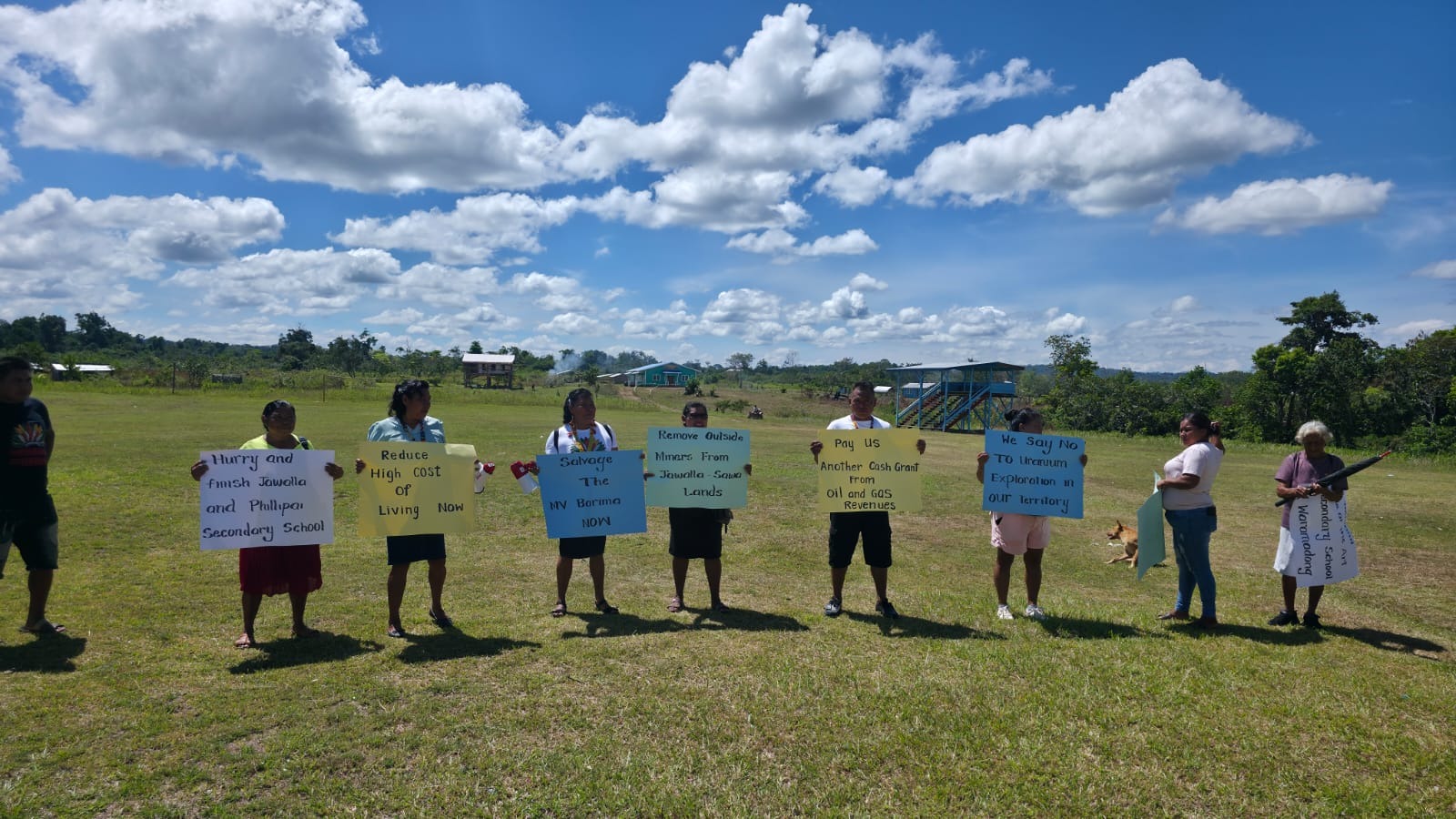
Protestors in Kamarang
For decades, remote communities faced encroaching illegal mining, environmental threats, and safety failures largely in isolation. That isolation dissolved on Wednesday as communities separated by vast distances joined in a single, organised movement. In Kangaruma, Region Seven, the atmosphere was solemn as Toshao of Kangaruma Raphael Joseph stood alongside his village council and residents to voice the core issues driving the national mobilisation.
“I stand firm today as a Toshao of Kangaruma Village, with my village council and my people, in a peaceful protest,” the Toshao declared. “We are not making noise- we are making a cry for justice. We march for four wounds that have not healed: We remember our daughters of the Mahdia dorms fire, we demand justice for the MV Barima, we stand with Chinese Landing, and we say no to uranium on our traditional lands. We are peaceful, but we are firm. We are the guardians of these forests. For generations we protect them. We will not be silent while our children burn in locked dorms, drown in old boats, and lose their lands to mining.”
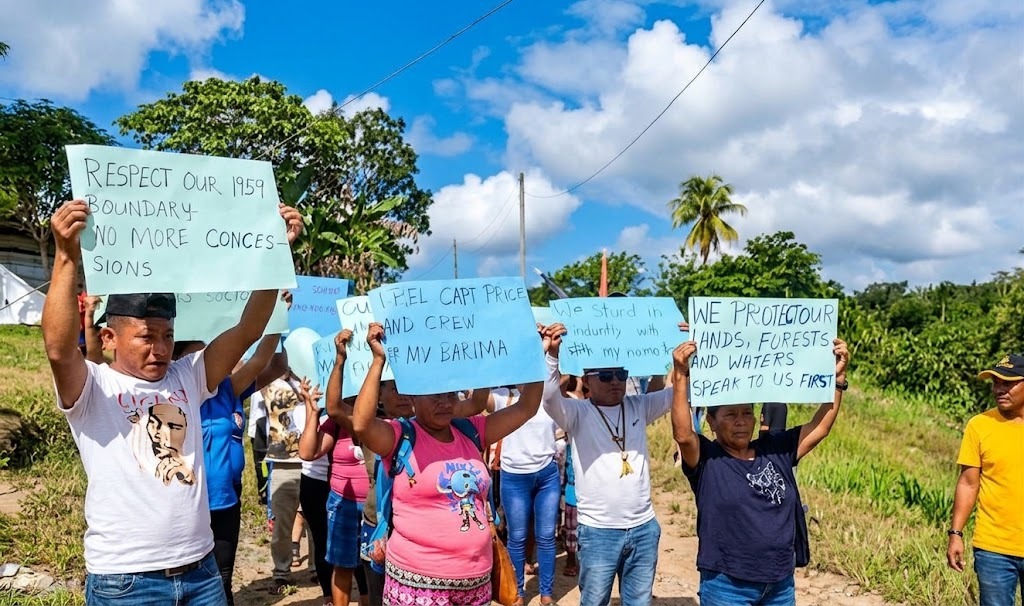
Protestors in Kangaruma
The wave of demonstrations highlighted a unified front against ongoing environmental degradation and unapproved industrial projects. In Phillipai, located in the Upper Mazaruni, demonstrators gathered along the waterways under the banner “Water is life to us—no contamination,” urging an immediate halt to illegal mining activities threatening local rivers. Demonstrators insisted that the government strictly honor free, prior, and informed consent, demanding “Speak to us first” before any prospective uranium exploration or mining concessions are considered on traditional lands. Furthermore, Phillipai residents called for the protection of their 1959 boundaries, an end to new mining concessions, and full support to “Free Chinese Landing Village.”
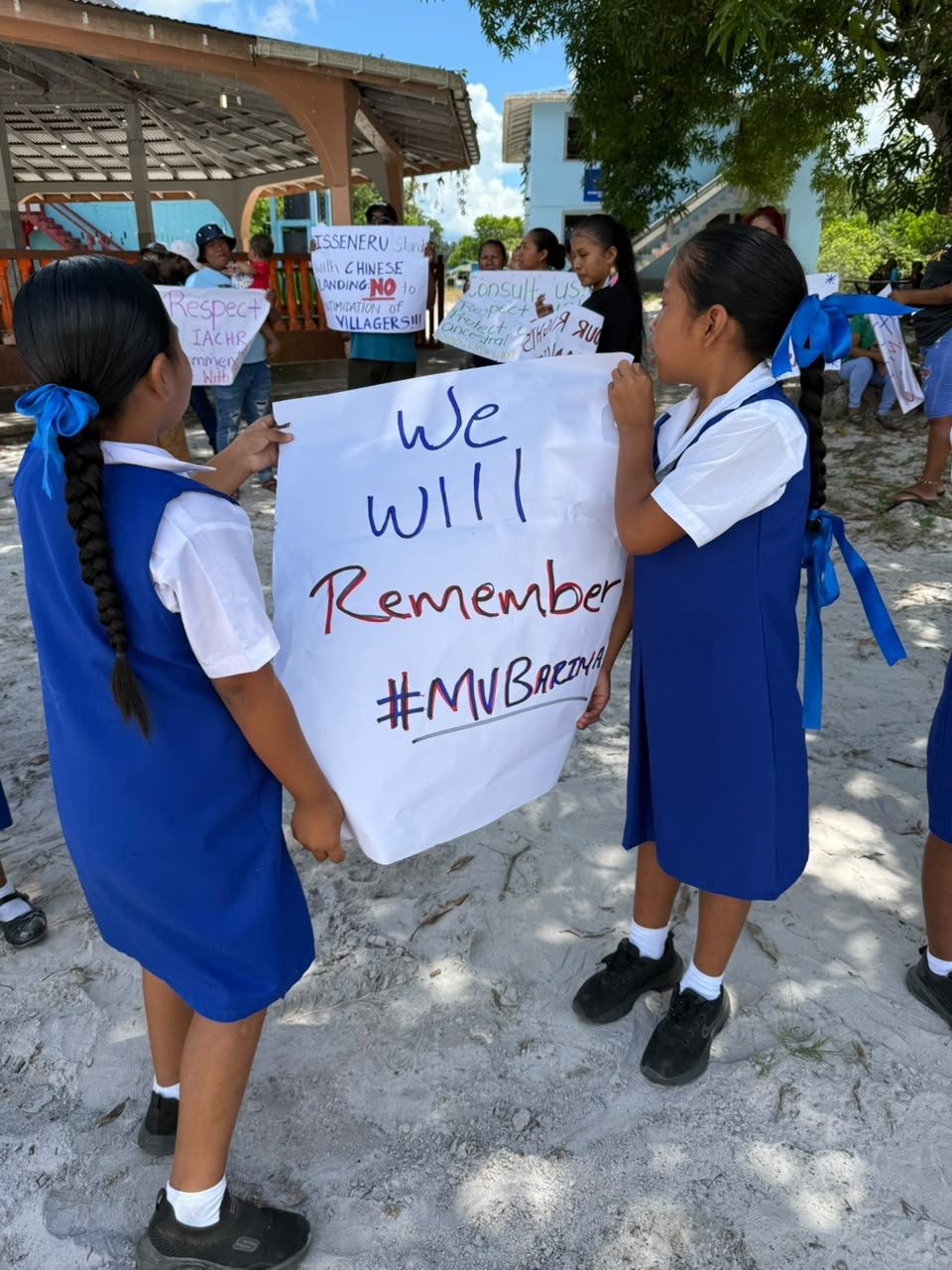
Protestors in Isseneru
Joining the protest, residents of Isseneru mobilised to voice their own demands, calling specifically for the salvaging of the MV Barima, an end to mining encroachment on their lands, and an immediate halt to uranium exploration. Across Chinese Landing and Tassawini in Region One, residents led protests calling for urgent intervention against illegal mining in Jawalla, Isseneru, and their own communities. Protesters delivered a stark reminder to outside interests, asserting, “For you it’s a backdam but it’s our home.” The sentiment was echoed in Kako, Region Seven, where demonstrators rallied under the principle “Our land is not a mining block,” calling for a halt to illegal mining in Jawalla, Kako, and Chinese Landing, while demanding that authorities formally recognise indigenous residents as the primary protectors of their territorial waterways.
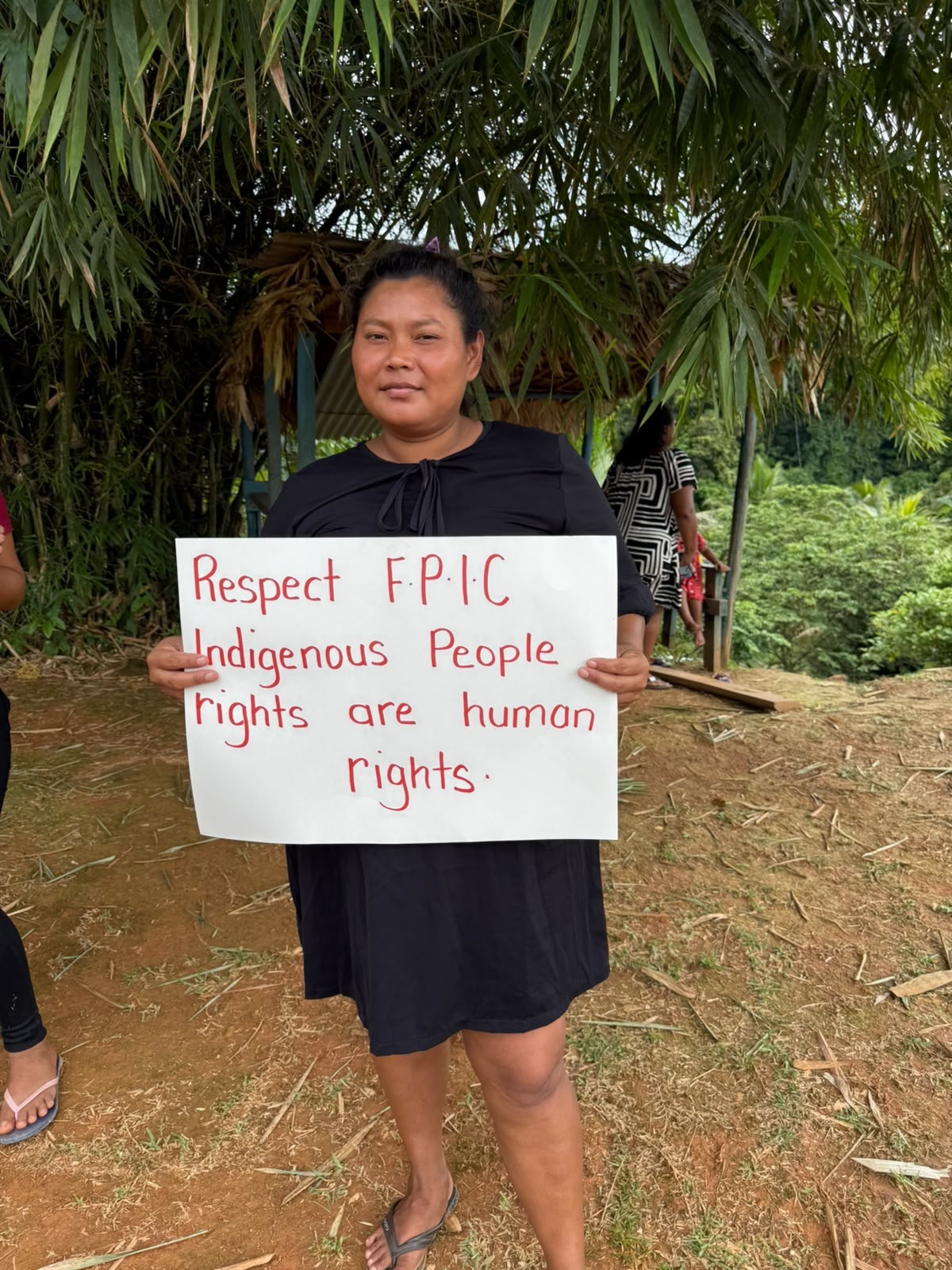
Protestors in Chinese Landing
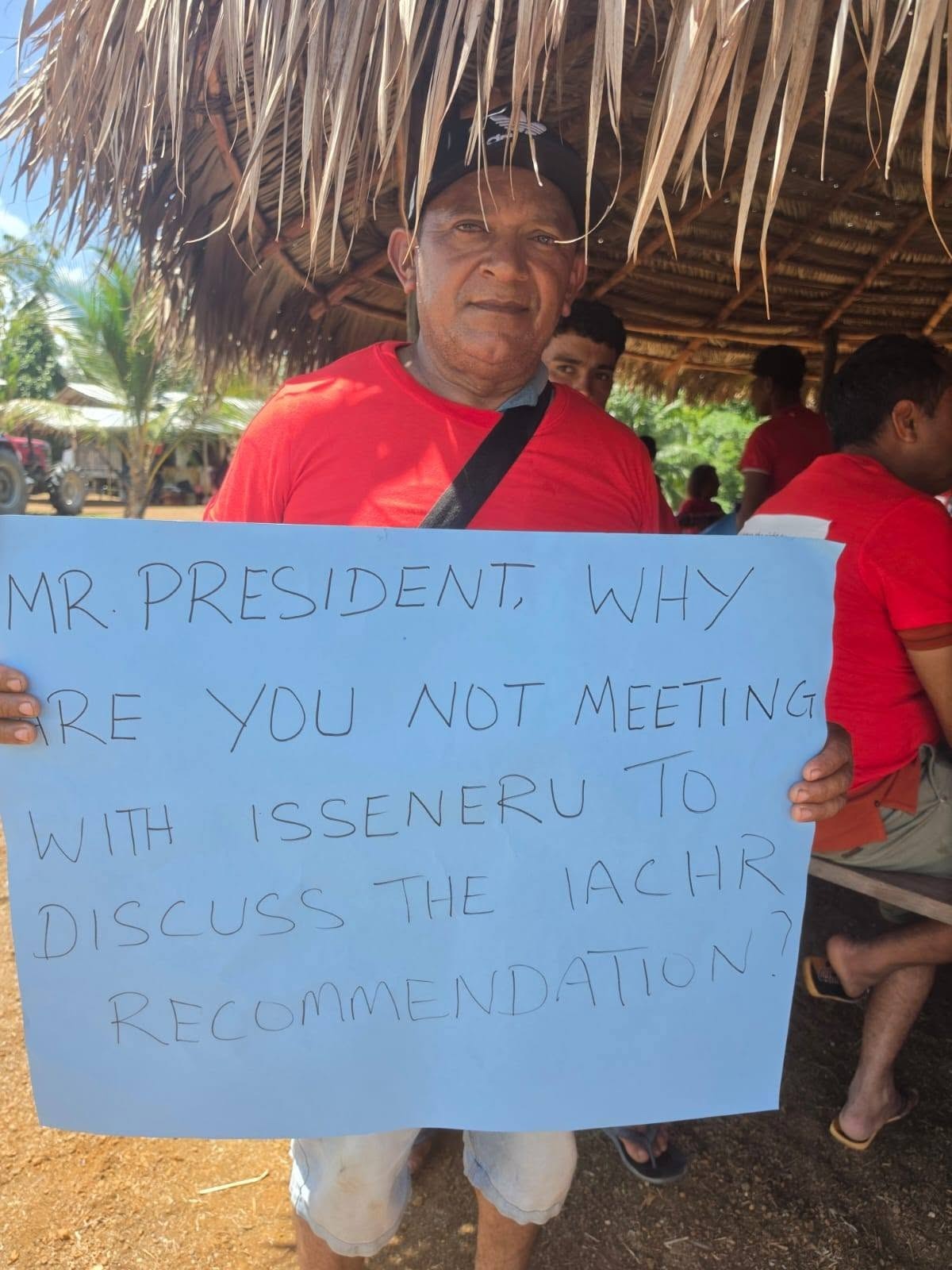
Protestors in Kangaruma
Beyond land and environmental rights, the coordinated movement addressed urgent infrastructure, safety, and economic crises affecting interior families. Demonstrators across all participating villages called for a faster process to salvage the sunken MV Barima vessel, demanding that authorities “float the boat now” and “free Capt. Price and crew.” Protesters also demanded direct financial relief from the government to help families cope with the skyrocketing cost of living in remote regions. In Kako, residents specifically called for immediate state intervention to subsidise high air travel costs, while in Kamarang and Warawatta, protesters demanded the urgent replacement of the decrepit DC Caesar Fox Secondary School in Waramadong with a modern facility for the region’s youth.
What marks this historic mobilisation is not merely the wide scope of demands, but the organised solidarity demonstrated across administrative regions. From the Upper Mazaruni to Barima-Waini, residents emphasised accountability across every sector, asserting that every human life has equal value. By organising simultaneously across Region One and Region Seven, these communities have fundamentally reshaped the dialogue surrounding indigenous rights, resource extraction, and rural development in Guyana. The message from the guardians of the forest remains clear, firm, and collectively united, “Fix the system, it is broken.”
Source: Kaieteur News