




…warns against wasteful subsidies as oil revenues soar and economy expands
(Kaieteur News) – The International Monetary Fund (IMF) has urged Guyana to strengthen oversight of public spending, resolve outstanding cost-oil audits and improve transparency in the management of public finances as the country’s oil-driven economy continues to expand rapidly.
In its latest assessment of Guyana’s economy, released on Thursday, the IMF also recommended that the government improve the targeting of subsidies, strengthen compliance with public procurement rules and reinforce anti-corruption safeguards as billions of dollars in oil revenues flow into the economy.
The Fund cautioned that if oil prices remain persistently high, a larger share of additional revenues should be saved, taking into account the country’s capacity to absorb increased spending.

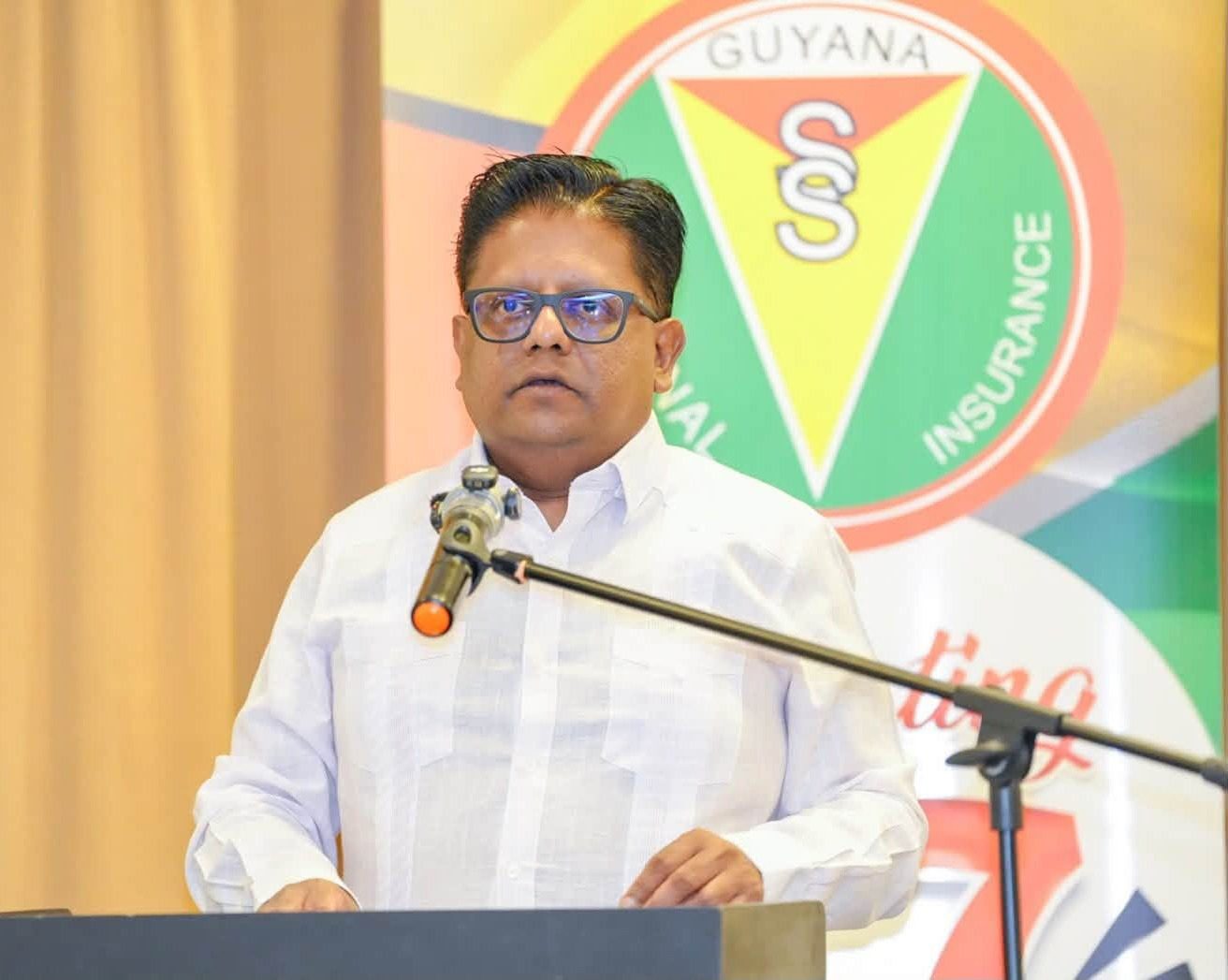
Finance Minister, Dr. Ashni Singh
It further recommended that broad measures intended to cushion consumers from rising prices should gradually be replaced with targeted assistance for vulnerable groups.
The recommendations form part of the IMF Executive Board’s 2026 Article IV consultation with Guyana, which examined the country’s economic performance, fiscal management and medium-term outlook.
While describing Guyana’s economic prospects as highly favourable, the Fund stressed the importance of maintaining fiscal and financial stability, strengthening governance and ensuring that rapid growth translates into durable and inclusive development.
Outstanding oil audits
Among the governance priorities identified by the IMF was the need to resolve outstanding cost-oil audits, improve the timely publication of accounts by public enterprises and government agencies, and strengthen audit capacity, particularly in the oil and gas sector.
This newspaper reported last week that more than five years after a British consultant flagged the misuse of US$214 million of Guyana’s oil money by ExxonMobil, the stalemate has landed before the International Chamber of Commerce (ICC).
This was confirmed by Minister of Natural Resources, Vickram Bharrat in a brief telephone interview with Kaieteur News on Tuesday. The minister told this publication, “Yes the ICC will make a decision on a sole expert.”
The two sides were unable to agree to a sole expert to resolve the dispute on the first audit of US$1.6 billion in expenses racked up by Exxon during the period 1999 to 2017.
As such, Bharrat said the procedure laid out in the 2016 Production Sharing Agreement (PSA) has been followed where the two parties are currently before the international body awaiting the appointment of a sole expert to determine the way forward on the US$214 million dispute.
He was unable to state how soon a decision from the body is likely. “It’s already with the ICC. We have to wait on them. No fixed timeframe as yet,” Bharrat added.
In June this year, Exxon’s vice president and business services manager, John Colling hinted that the dispute may land before the ICC.
Colling said, “So we’re in discussion currently with the government of Guyana regarding the selection of the sole expert. We have not yet landed on a sole expert but have discussed a process to ultimately arrive at one.”
As such, he noted, “If we’re unable to arrive at a mutual selection, that can be referred to the ICC to make the selection, which very well may be the next step in the process.”
While the first audit drags on, two other audits of the company still remain to be concluded as well. The second audit, for the period 2018 to 2020 was conducted by VHE consulting. The local audit team found that another US$65 million of the US$7.2 billion in expenses was incorrectly charged to Guyana.
Questions still remain on whether the full report was published by the GoG for the US$7.2 billion audit. Meanwhile Exxon’s third and largest audit, on record to date, amounts to a whopping US$19.6 billion. It was conducted by the same local group, VHE. Although government received that report since May 2025, it has refused to make the document public. The administration is also not inclined to highlight the disputed costs flagged by the auditors.
Public procurement
The Fund also called for consistent compliance with the public procurement framework as government expenditure expands.
It said efforts to strengthen anti-money laundering and counter-terrorism financing measures and anti-corruption frameworks should continue, including through improvements to the Integrity Commission and the asset declaration regime.
The recommendations come as Guyana continues to develop its petroleum sector and channel oil revenues into infrastructure and other public investments.
Deficit expected to widen in 2026
Despite strong oil revenues, the IMF projected that Guyana’s overall fiscal deficit would widen from 5.5 per cent of gross domestic product (GDP) in 2025 to 6.4 per cent in 2026, partly reflecting transfers and electricity subsidies.
The deficit is expected to improve in 2027.
The Fund said a comprehensive medium- and long-term fiscal strategy would help preserve sustainability and ensure that future generations also benefit from the country’s natural resource wealth.
It recommended that Guyana strengthen its non-oil primary balance over the next decade, with a long-term objective that could include preserving the real per capita value of assets held in the Natural Resource Fund (NRF).
The IMF noted that the country’s existing budget frameworks provide a foundation for developing clearer fiscal targets.
It also cautioned that public spending must remain aligned with development needs and the economy’s capacity to absorb investment effectively, while accounting for the high cost of delivering public services in a country with a relatively small and geographically dispersed population.
Economy grows by 19.3 per cent
The IMF reported that Guyana’s real GDP grew by 19.3 per cent in 2025, following average growth of nearly 40 per cent during 2023 and 2024.
Oil GDP increased by 21.1 per cent last year, while non-oil GDP expanded by 14 per cent, driven largely by construction and supported by agriculture, mining and manufacturing.
Oil production exceeded 900,000 barrels per day, while stronger labour market conditions and private-sector credit growth also supported economic activity.
The Fund projected overall economic growth of 22.3 per cent in 2026, with oil GDP expected to grow by 26.1 per cent and non-oil GDP by 10.2 per cent.
Non-oil growth is projected to average approximately seven per cent over the medium term.
The economic expansion has also strengthened Guyana’s external position. Gross international reserves reached approximately US$1.4 billion in 2025, while the NRF accumulated about US$3.3 billion by the end of that year.
The IMF said the country’s economic fundamentals remain strong and noted that Guyana continues to maintain one of the lowest debt-to-GDP ratios in the Western Hemisphere.
However, inflation, which averaged 3.3 per cent in 2025, is projected to rise to 4.1 per cent in 2026, reflecting higher global energy and food prices.
The Fund said available indicators did not point to clear overheating or competitiveness pressures, but warned that strong wage growth and wage-based real exchange rate measures warranted close monitoring.
It also identified oil price volatility, potential overheating and climate-related shocks as risks to the otherwise favourable economic outlook.
The banking system was assessed as well capitalised and liquid, with improving asset quality. Nevertheless, the IMF said rapid housing market growth warranted close monitoring and recommended the development of a real estate price index.
It also called for stronger cybersecurity standards as financial services become increasingly digital, alongside a comprehensive framework to help authorities identify and manage risks across the financial system.
On monetary policy, the Fund said liquidity management should remain consistent with Guyana’s exchange rate arrangement and price stability. It added that further tightening could be necessary if demand, credit or exchange rate pressures intensified.
Diversification remains critical
The IMF said Guyana should continue investing in human capital, expanding employment opportunities, addressing labour shortages and strengthening food security to support diversification beyond oil.
It noted that the Gas-to-Energy project is expected to reduce reliance on fuel-based electricity generation, lower energy costs and improve competitiveness.
The Fund also stressed the importance of investments in sea defences, drainage and climate-resilient agriculture to protect the country against climate risks.
It called for improvements in official statistics, including updated national accounts and price data, regular labour force surveys, more complete publication of census results and the introduction of a new household budget survey.
The IMF concluded that while Guyana’s growth outlook remains highly favourable, stronger fiscal frameworks, sound governance and effective public spending will be essential to preserving stability and ensuring that the country’s oil wealth supports sustainable development.
Source: Kaieteur News



