




…points to falling case clearance rates, court delays, financial accountability
(Kaieteur News) – Attorney-at-law Christopher Ram has warned that confirming Guyana’s acting Chancellor and Chief Justice will do little to improve the administration of justice unless deeper problems affecting judicial performance, court management and financial accountability are addressed.
In a business and economic commentary dated 13th October,2026, Ram said the prolonged reliance on acting appointments to fill the Judiciary’s two highest offices must be resolved, but argued that the focus on confirmation was overshadowing more fundamental deficiencies within the justice system.
“Even if both acting officeholders were confirmed tomorrow, there is little reason to believe that such appointments, without accompanying reforms, would significantly improve the administration of justice,” Ram stated.

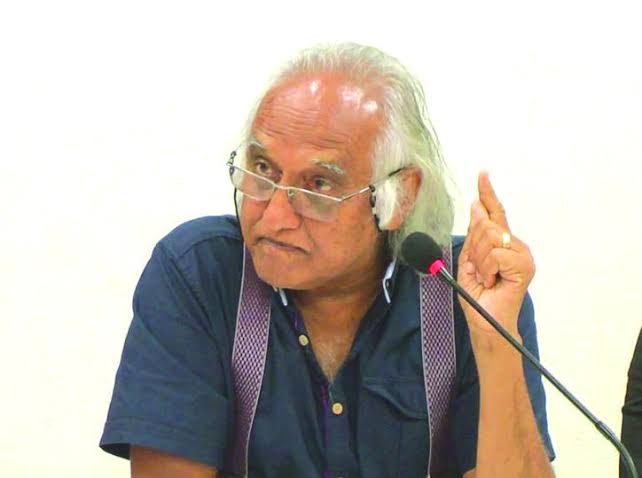
Attorney at Law, Christopher Ram
He argued that the Judiciary’s performance must be assessed by results rather than the amount of money spent, the number of judges appointed or the modernisation initiatives undertaken.
While acknowledging improvements such as additional judges, upgraded facilities, electronic filing and virtual hearings, Ram said the Judiciary’s own statistics raised serious questions about its ability to dispose of cases efficiently.
Citing page 30 of the Judiciary’s 2023 Annual Report, he noted that the Demerara Judicial Registry’s clearance rate for Statements of Claim plunged from 54.8 per cent in 2021 to 4.7 per cent in 2023.
The clearance rate for Fixed Date Applications also fell from 88.3 per cent in 2022 to 25.4 per cent in 2023.
In actual numbers, Statements of Claim concluded dropped from 204 in 2021 to just 16 in 2023, while Fixed Date Applications concluded declined from 1,653 in 2022 to 486.
Ram said the Court of Appeal presented a similarly troubling picture. According to page 26 of the same report, 361 matters were filed in 2023, but only 163 were disposed of, representing a disposal-to-filing ratio of approximately 45 per cent, down from 76 per cent in 2021.

Acting Chancellor of the Judiciary, Roxane George
“These are not allegations by dissatisfied litigants but figures published by the Judiciary itself, which require explanation and, where necessary, corrective action,” he said.
Ram acknowledged that changes in reporting methodology, staffing or case classification might account for some of the declines. However, he argued that the Judiciary should explain the figures and publish comparable data for 2024 and 2025.
He said the public was entitled to know how many cases remained outstanding, their age, how long judgments had been reserved and what measures were being taken to reduce delays.
“Judicial independence protects judges against interference in deciding cases; it does not exempt the administration of the courts from scrutiny,” he stated.
Court performance and accountability
Ram pointed to the temporary appointments of Justices Arif Bulkan and Rafeek Khan as evidence that experienced and productive judges could help reduce outstanding cases.
Their contribution, he argued, suggested that the problem was not simply the number of judges available, but also how effectively judicial resources were deployed.
He also questioned the extent of financial accountability within the Judiciary, noting that the institution enjoys constitutional financial and administrative autonomy under Articles 122A and 222A of the Constitution, including funding through a direct charge on the Consolidated Fund.
Article 223, he added, requires the Auditor General to audit the accounts of all courts.
“Financial independence is essential, but it cannot become an exemption from accountability,” Ram said.
He cited the Supreme Court’s 2022 Annual Report, which recorded approximately $3.59 billion in funding and $3.20 billion in expenditure. According to Ram, the report contained financial schedules but no identifiable accompanying independent audit opinion.
He further pointed to the Auditor General’s 2024 Annual Report, which identified completed audits of the Supreme Court’s financial statements for 2015, 2016 and 2017, but did not identify corresponding audits for subsequent years.
Ram questioned whether financial statements for later years had been prepared and audited, and where the resulting reports could be examined.
He also criticised delays in the publication and presentation of the Judiciary’s annual reports. The 2022 report was laid before the National Assembly in January 2024, while the 2023 report was not laid until November 2025. He noted that reports for 2024 and 2025 were not listed on the Judiciary’s website at the time of his commentary.
“As an officer of the court, I regard judicial independence as indispensable, but the Judiciary cannot insist that other public authorities comply with the law and account for public funds while treating its own obligations as secondary,” he said.
“Having more money is no substitute for proper financial management.”
Appointments must be based on merit
Turning to the constitutional impasse over the substantive appointments, Ram noted that Article 127 requires agreement between the President and the Leader of the Opposition for the appointment of a substantive Chancellor and Chief Justice.
However, he argued that acting appointments should not automatically entitle the officeholders to confirmation.
He said appointments to the Judiciary’s highest offices should follow a transparent, merit-based process that considers legal competence, integrity, experience, administrative ability, leadership and a commitment to meaningful judicial reform.

Acting Chief Justice, Navindra Singh
Ram also argued that other qualified candidates deserved consideration, pointing to the respective judicial careers of Justice Deo Rishi Persaud and acting Chief Justice Navindra Singh.
Persaud was appointed to the High Court in 2004 and the Court of Appeal in 2017, while Singh was appointed to the High Court in 2012 and the Court of Appeal in 2025.
Ram acknowledged that the differences in their career timelines did not automatically determine who should be appointed, but said they demonstrated why confirmation should not be treated as a foregone conclusion.
“Neither seniority nor incumbency should replace a proper assessment of merit,” he stated.
Ram maintained that the constitutional appointments impasse should be resolved, but warned against confusing that outcome with meaningful reform of the justice system.
He argued that even if the acting Chancellor and Chief Justice were confirmed immediately, outstanding cases would remain, reserved judgments would still need to be delivered, and questions about judicial performance and financial accountability would persist.
“The fundamental problem is not the absence of substantive titles but the need for effective leadership, efficient judicial administration and meaningful accountability. Unless these deficiencies are addressed, confirmation is unlikely to produce any significant improvement in the delivery of justice,” Ram concluded.
Source: Kaieteur News



