





(Kaieteur News) – The Commission of Inquiry (CoI) into the fatal capsizing and sinking of the M/V Barima officially opened its public proceedings on Wednesday morning, with commission chairman Godfrey Smith, SC, pledging a thorough and independent investigation into the circumstances surrounding the tragedy.
Delivering his opening statement at the preliminary hearing at the Arthur Chung Conference Centre in Georgetown, Smith emphasised that the tribunal’s mandate extends far beyond the vessel’s final moments, promising to examine operational failures, regulatory compliance, and individual accountability without fear or favour.
“Put in plain language, our task is to find out what happened to the BARIMA and why it happened,” Chairman Smith declared. “What circumstances permitted it to happen? Were there warning signs? Were there failures? Were laws, regulations and safety procedures complied with? Were they adequate? Were they properly administered and enforced? Who is responsible and what is to be done about it?”
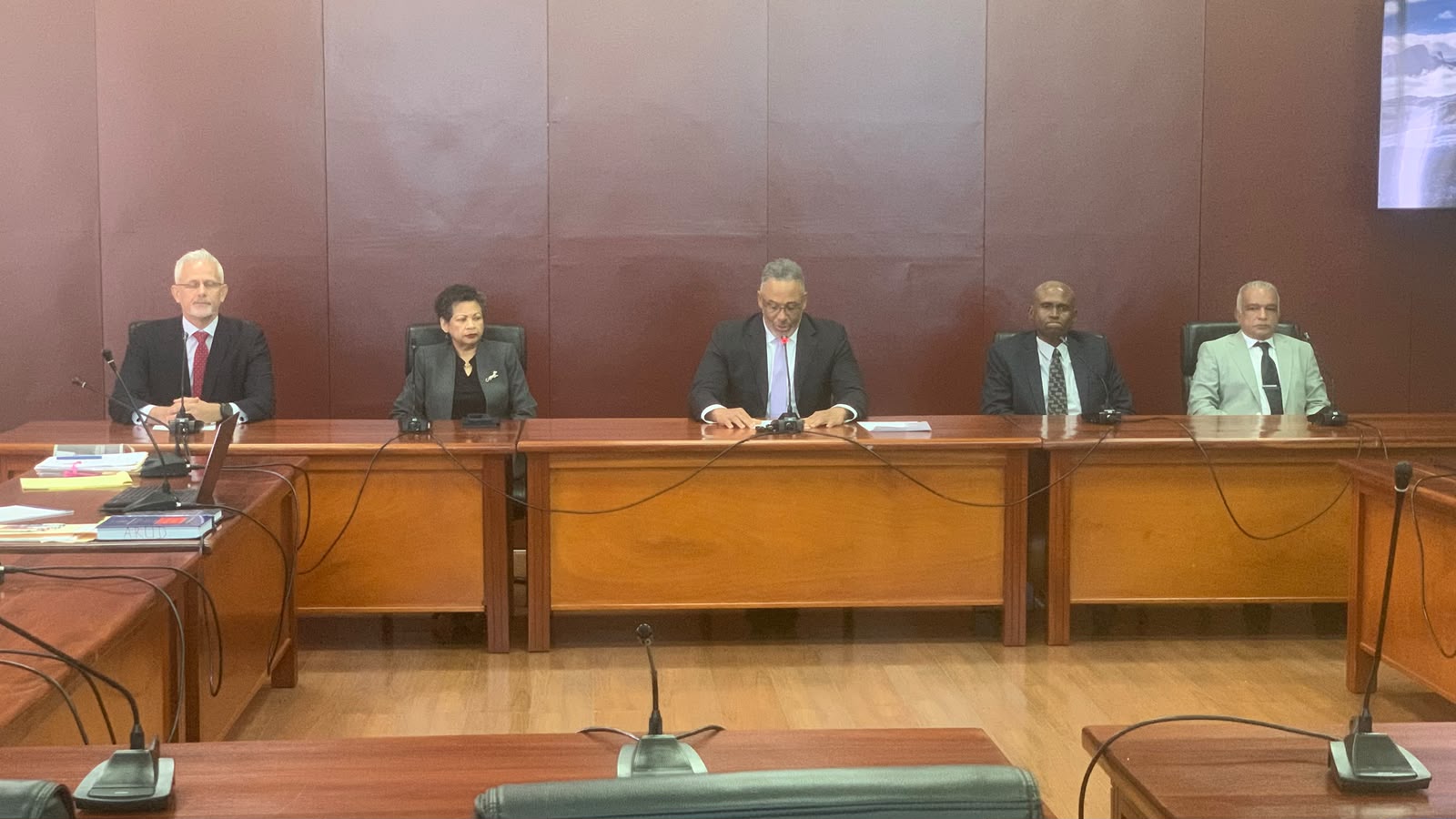
Commissioners of the COI, Chairman of the Commission of Inquiry, Justice Godfrey Smith (centre) along with members of the Commissioners Dr. Andrzej Jasionowski (far left), Nyree Alfonso (left), Rear Admiral (Ret’d) Hayden Pritchard (right), and Captain Hamada Fouda (far right) during their opening ceremony on Wednesday.
The M/V Barima sank on the night of July 18, 2026, inflicting severe loss of life and leaving numerous persons unaccounted for. Following the disaster, President Irfaan Ali appointed the commission on July 30 under the Commission of Inquiry Act, tasking the body with investigating the casualty, the emergency response, and the broader maritime oversight system.
Addressing the scope of the probe, Smith outlined six interrelated areas of inquiry, the seaworthiness and physical stability of the vessel, passenger and cargo loading procedures, the qualifications and decisions of the crew, the effectiveness of search and rescue operations, human factors during the emergency, and the regulatory oversight provided by State entities such as the Transport and Harbours Department and the Maritime Administration Department.
Smith, a former judge of the Eastern Caribbean Supreme Court, sought to clarify the legal nature of the proceedings, stressing that the commission holds statutory powers to summon witnesses and compel evidence, yet does not sit as a court of law.
“From the outset, it is important that the public understands the character of these proceedings,” Smith said. “This is a Commission of Inquiry. It is not a criminal trial. In many ways, a Commission of Inquiry may appear to resemble a court, but it is not. It does not sit as a criminal court and will not determine the criminal guilt of anyone. Nor will the commission determine civil liability like a court exercising civil jurisdiction.”
He noted, however, that if evidence of criminal or civil wrongdoing emerges during the hearings, the commission will refer its findings to the appropriate authorities, meaning the inquiry’s report could act as a catalyst for future legal proceedings.
To guarantee procedural fairness, the tribunal has enacted formal rules of procedure allowing individuals, organisations, or affected families to apply for interested party standing, while ensuring that any party facing adverse criticism is afforded a full opportunity to respond.
Reiterating a public call for evidence, Smith urged survivors, witnesses, and knowledgeable members of the public to come forward and submit statements to the commission’s secretariat, assuring that all documentary and testimonial evidence will be scrupulously examined.
The commission began field work, meeting with survivors in Georgetown on Wednesday afternoon before conducting physical inspections on Thursday and Friday at the Kingston Goods Wharf, MARAD, the Transport and Harbours Department, and dry dock facilities. Early next week, commissioners will travel to Region One to engage affected residents and families directly in Mabaruma and Port Kaituma.
Chairman Smith stated that the commission expects to complete its work within approximately six months and noted that the tribunal stands ready to issue interim safety recommendations to the president prior to submitting its final report if urgent risks to public safety are uncovered.
“We do not intend to take short cuts, jump to conclusions or deliver a rushed report,” Smith affirmed. “Our allegiance is to the law, to our terms of reference, to procedural fairness and, above all, to the truth as established by credible, tested evidence.”
Source: Kaieteur News



