




…500 police officers to be trained in evidence processing
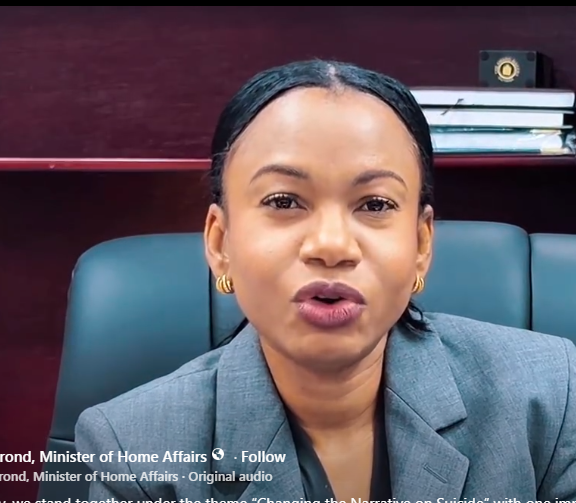
(Kaieteur News) – The Government of Guyana is building the capacity of the country’s forensic laboratory to process evidence locally, including ballistics and toxicology samples that are currently sent overseas for analysis, Minister of Home Affairs Oneidge Walrond has disclosed.
Speaking on a recent episode of the Starting Point Podcast, Walrond said strengthening local forensic capabilities would reduce the need to send samples abroad, a process she noted could be problematic. “…our samples don’t have to be sent abroad, which can be problematic. So, to be able to do that processing right here, whether it’s ballistics and toxicology reports and have them. So, we’re building up the capacity of our lab to be able to do that,” the Minister said.

Minister of Home Affairs, Oneidge Walrond
Walrond also disclosed that significant financial resources are being spent on training 500 police officers in evidence processing, with the aim of strengthening the handling and preservation of evidence through the conclusion of trials.
The Guyana Forensic Science Laboratory (GFSL), which carries a reported price tag of $1 billion, was commissioned in July 2014. It was established under the Citizens’ Security Programme (CSP), an initiative undertaken by the Government in collaboration with the Inter-American Development Bank (IDB).
In September 2025, the Kaieteur News reported that the GFSL, in collaboration with the Government Analyst–Food and Drug Department (GA-FDD) and the Institute of Applied Science and Technology (IAST), had officially opened a three-day inter-laboratory training programme on Atomic Absorption Spectroscopy (AAS).
The training, held at the IAST boardroom at the University of Guyana’s Turkeyen Campus, was designed to strengthen technical capacity among laboratories in Guyana that currently use, or are preparing to adopt, Atomic Absorption systems.
According to a Ministry of Home Affairs press release, participating institutions included the GFSL, GA-FDD, IAST, Guyana Geology and Mines Commission (GGMC), University of Guyana, Hydrometeorological Service, Pesticides and Toxic Chemicals Control Board, National Agricultural Research and Extension Institute, Guyana Sugar Corporation, IMEX, Rice Development Board, Guyana Power and Light, and Demerara Distillers Limited.
The initiative was described as the first of its kind in Guyana, bringing together government and private-sector laboratories. The training was offered at no cost to participating institutions as part of efforts to improve scientific expertise and support sustainable development.
More recently, in February 2026, the United States Embassy in Guyana announced that forensic laboratory professionals from the GFSL had participated in an intensive technical exchange at the U.S. Drug Enforcement Administration’s (DEA) Southeast Laboratory in Miami from February 9 to 13.
The programme was hosted by the U.S. Department of State’s Bureau of International Narcotics and Law Enforcement Affairs (INL) and the DEA, with the aim of strengthening cooperation between the United States and Guyana in synthetic drug detection and reporting.
The Guyanese team joined forensic laboratory directors, chemists and quality assurance managers from the Saint Lucia Forensic Science Laboratory, the Jamaica Institute of Forensic Science and Legal Medicine, and the Royal Bahamas Police Force Forensic Laboratory.
The training combined theoretical instruction with practical exercises in Gas Chromatography–Mass Spectrometry (GC-MS). Participants also observed DEA laboratory personnel processing a 200-kilogram bulk seizure of suspected cocaine, giving them practical insight into advanced forensic techniques.
According to the embassy, the collaboration supports the U.S. Department of State’s implementation of Executive Order 14367, which designates fentanyl as a weapon of mass destruction. The initiative seeks to address gaps in regional capabilities by strengthening the detection of synthetic narcotics and fentanyl, as well as safe handling, evidence preservation and reporting in Guyana and across the Caribbean.
Source: Kaieteur News



